7 Reasons Your Hula Hoop Keeps Falling as an Adult (It's Rarely Just Rhythm)
Quick Answer: The most common reasons an adult’s hula hoop keeps falling are using a hoop that’s too small or too light for an adult body (most childhood or store-bought hoops are), incorrect hip motion (rocking front-to-back instead of the correct push-pull), and rushing the learning pace instead of building the motion in isolation first.
The childhood memory says hula hooping should be instant and easy. The adult body, and an undersized hoop, usually says otherwise.

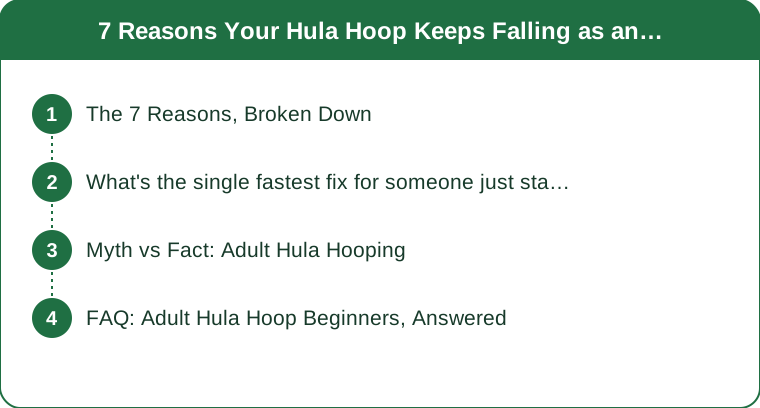
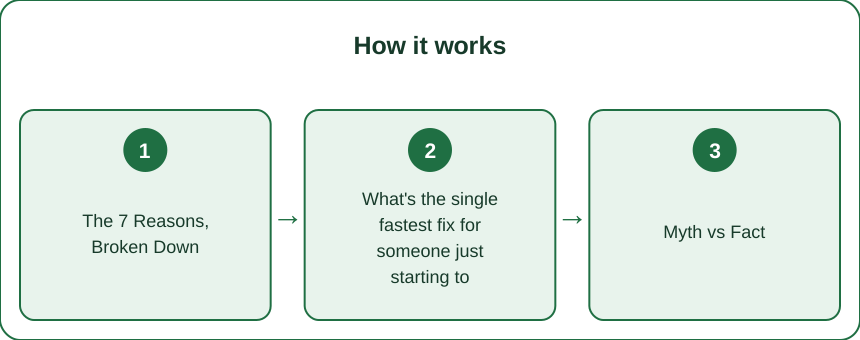
The 7 Reasons, Broken Down
1. Using a hoop that’s too small
Adult hula hoops need to be larger in diameter than the children’s or lightweight store-bought hoops most people default to — a hoop reaching roughly between the floor and the belly button when stood upright is a reasonable general sizing guide.
2. Using a hoop that’s too light
Lighter hoops spin faster and are harder to keep timed with body motion for beginners — a slightly heavier hoop actually moves slower and is easier to learn on, counter to what most people assume.
3. Rocking front-to-back instead of push-pull
Many beginners rock the hips forward and backward, which doesn’t effectively catch a horizontally spinning hoop — the correct motion is closer to a side-to-side push-pull, matching the hoop’s actual rotation plane.
4. Standing with feet together
A staggered stance, one foot slightly forward, gives more stable weight transfer for the hip motion than feet held together, which limits the range of the push-pull motion.
5. Trying to hoop and also style the arms/movement simultaneously too early
Adding arm styling or dance elements before the core hip motion is consistent usually causes the basic motion to break down — isolating the hip movement first, without other movement layered on, builds a more durable foundation.
6. Practicing on an uneven or overly soft surface
Soft surfaces like grass or carpet absorb foot movement in a way that makes the subtle weight shifts underlying hoop motion less effective than a firm, flat surface.
7. Giving up before the motion becomes automatic
Most adults quit within the first 15-20 minutes of relearning, right around when the motion typically starts becoming more automatic — a slightly longer initial session than expected is often what’s actually needed.
What’s the single fastest fix for someone just starting to relearn?
Hoop size and weight — swapping to a properly sized adult hoop (larger and moderately weighted, not a lightweight kids’ hoop) resolves a surprising share of the “I just can’t do this anymore” frustration on its own, before any technique adjustment is even needed.

Myth vs Fact: Adult Hula Hooping
Myth: If you could hula hoop as a kid, your body should remember how automatically. Fact: Adult body proportions and typical hoop equipment differ enough from childhood that the motion often needs to be relearned, not just recalled.
Myth: A lighter hoop is easier for beginners. Fact: Heavier hoops spin slower and are generally easier to learn on — lighter hoops are better suited to advanced tricks, not initial learning.
FAQ: Adult Hula Hoop Beginners, Answered
How long does it typically take to relearn as an adult?
Many adults report the core motion becoming reasonably consistent within 1-2 weeks of short daily practice sessions, faster than most expect.
Does hoop weight matter differently for cardio versus core-focused hooping?
Somewhat — heavier hoops used for beginner learning also tend to double as a more effective core workout once the motion is consistent.
Is bruising normal for beginners?
Some mild bruising is common in the first couple of weeks as the body adjusts to the hoop’s contact and correct positioning reduces it — persistent or worsening bruising is worth addressing with lighter practice sessions.
TL;DR:
- Equipment (hoop size and weight) is the most overlooked fix for adult beginners
- The correct motion is a side-to-side push-pull, not a front-to-back rock
- Isolating hip motion before adding arm styling builds a more durable foundation
- Most people quit right before the motion would have become automatic
The hoop falling isn’t usually a rhythm failure — it’s almost always a fixable mismatch between equipment, stance, or timing.
Keep Reading
This article is for general informational and styling purposes only. Fit, sizing, and product availability may vary.