7 Reasons Your Hoop Sessions Get Shorter as the Weather Cools
Quick Answer: In order of how often it is the real cause: you moved indoors and the ceiling and furniture shrank your range of motion, cooler skin and thicker clothing changed the hoop’s grip, the hoop itself is stiffer in cold air, indoor flooring gives different feedback than grass or concrete, sessions moved to the evening when you are more depleted, bruising from summer has not fully settled, and you are hooping in a room where you can hear yourself being loud. Most of it is fixable with clothing and floor space rather than technique.
The hoop did not get harder. The environment around it changed in four ways at once.
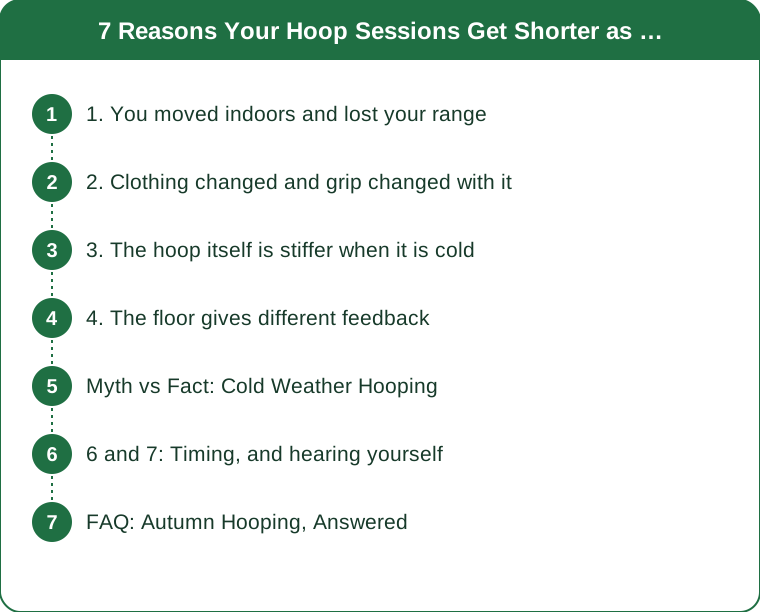
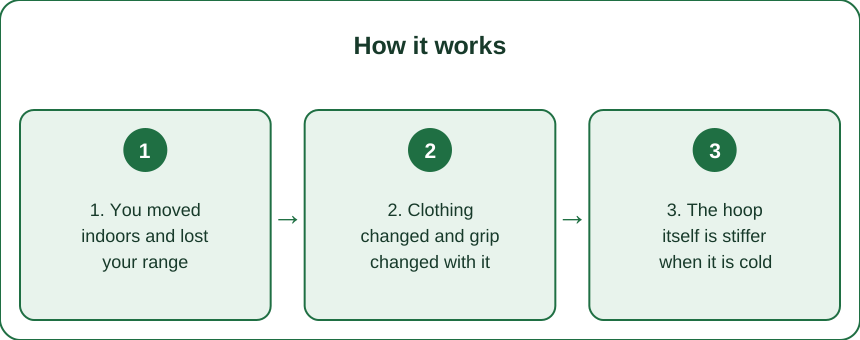
1. You moved indoors and lost your range
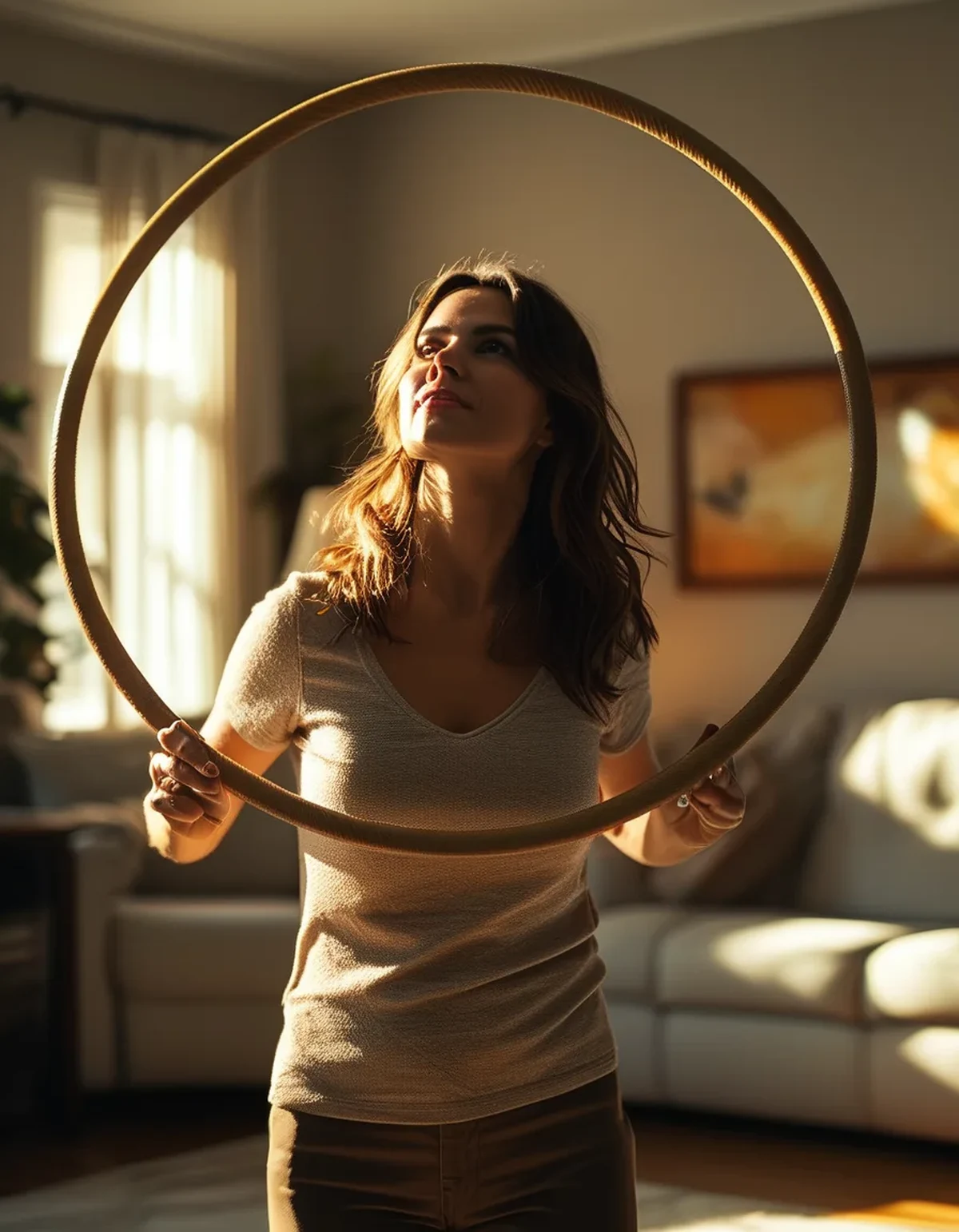
Outdoor hooping has unlimited horizontal space and indoor hooping does not. The unconscious response is to shrink your movement - smaller weight shifts, less travel, more rigid posture - and a smaller drive is exactly what makes a hoop drop.
Clear a genuine two-metre circle, not one metre. Most living room hoop sessions fail on space rather than skill.
Watch for the ceiling light. Anyone hooping above the waist or transitioning to hand hooping self-limits under a low fitting, and self-limiting movements are inconsistent movements.
Position yourself away from anything breakable. The knowledge that a lamp is behind you changes your movement whether you intend it to or not.
Check for the corner effect. Hooping in a corner constrains two directions and it is where most indoor sessions end up because that is where the free floor is.
And if the space genuinely is not there, a smaller and lighter hoop is easier to control in a tight room than a large heavy one, which is the opposite of what most people buy.
2. Clothing changed and grip changed with it
A weighted hoop needs friction against your body to stay up. Bare skin or a thin fitted top provides it. A slippery fleece or an oversized sweatshirt does not.
Loose layers are the biggest single change from summer to autumn, and a hoop that suddenly falls in October is very often a hoop meeting a loose jumper.
Wear a fitted top with some texture. Cotton or a brushed fabric grips; smooth technical fabrics and anything shiny do not.
Avoid drawstrings, hoodie pockets, and waistband bulk. Anything that adds an uneven surface at the waist creates a step the hoop catches on.
High-waisted fitted leggings help by giving a consistent surface across the contact band rather than a seam line.
And if you have layered up because the room is cold, warm the room instead. Hooping in a jumper is fighting your own clothing for the whole session.
3. The hoop itself is stiffer when it is cold
Polypro and HDPE hoops both get stiffer and less forgiving in cold air, and a hoop stored in a garage or a car boot is properly cold when you start.
A cold hoop transmits more impact, which is why it feels like it bruises more in autumn even at the same weight.
Bring it inside twenty minutes before you use it. This is a free fix and it changes the feel noticeably.
Cold polypro is also more brittle, so a hoop that has lived outside all summer and now gets cold is more likely to crack at a join.
Grip tape behaves differently too - it hardens and can feel slick until it warms with use.
Store it indoors from September onward. A hoop hanging in a hallway is warm, visible, and therefore used more often, which quietly solves two problems at once.
4. The floor gives different feedback
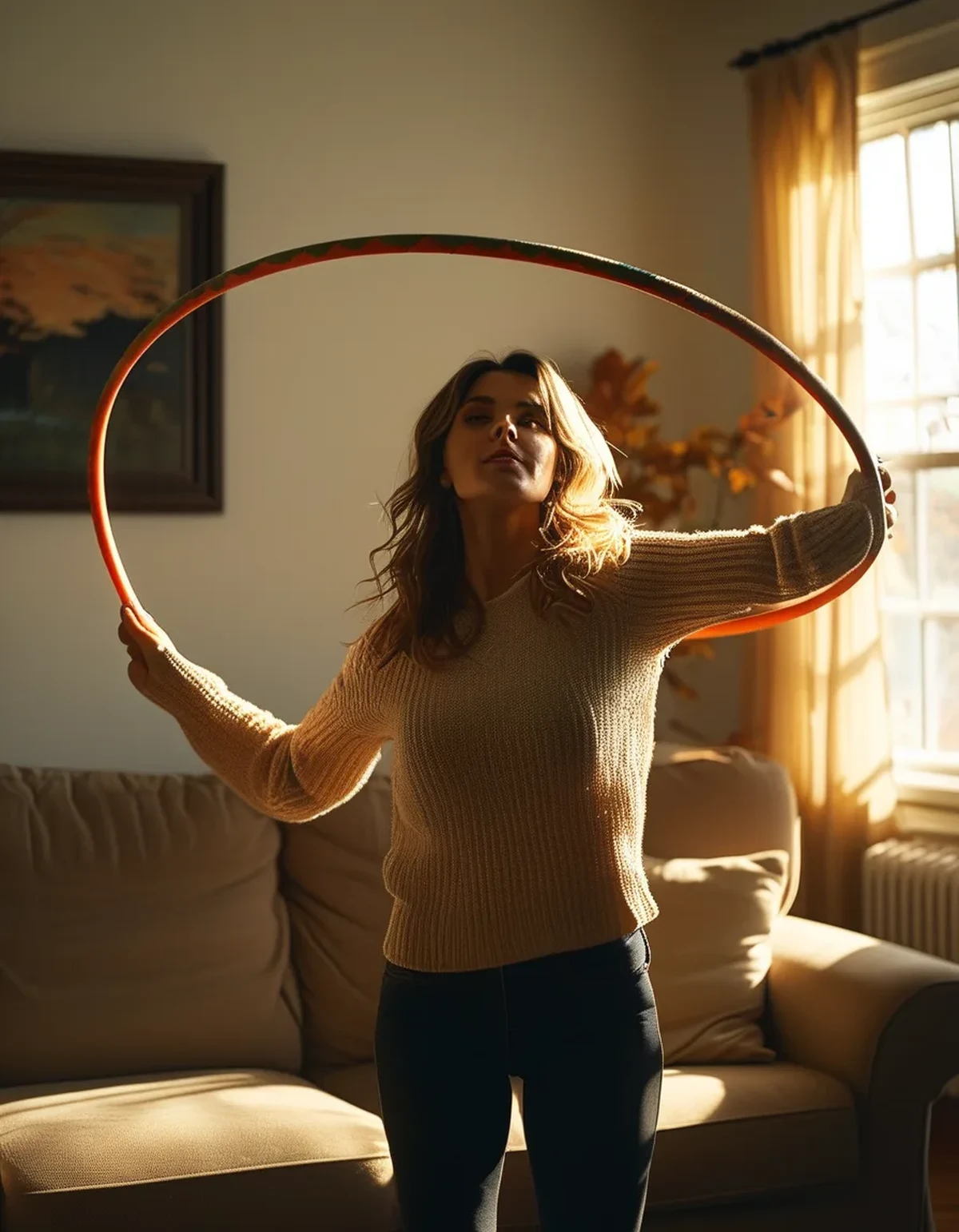
Grass absorbs and forgives; hard floors do not. Moving from lawn to laminate changes your footwork, your balance, and how much you brace, and most people brace more indoors.
Bracing is what stops a hoop. A stiff torso does not produce the smooth push-pull rhythm the hoop needs, and the more careful you are about your footing the stiffer you get.
Trainers on carpet stick and change your pivot. Bare feet or grip socks on a hard floor is usually better than shoes on carpet for indoor hooping.
Noise transmission matters in flats and it changes behaviour. People hoop more quietly, which means less foot movement, which means less drive.
A yoga mat is too small and creates an edge to trip on. Either clear the floor or use nothing - a partial surface is the worst option.
And watch for rugs sliding. A rug that moves under you interrupts the weight shift the hoop is relying on.
Myth vs Fact: Cold Weather Hooping
Myth: if the hoop keeps dropping, you need a heavier one. Fact: heavier hoops are easier for absolute beginners and harder on the body over time. If it started dropping in autumn, look at clothing and floor space first - the hoop was fine last month.
Myth: bruising means it is working. Fact: bruising means impact exceeded tissue tolerance. Some early bruising is common; ongoing bruising means the hoop is too heavy, too hard, or your session is too long for your current conditioning.
Myth: you should push through the bruised phase. Fact: bruised tissue is more easily bruised. Training around a bruise, with shorter sessions and a lighter hoop, is how people get past this phase rather than repeatedly restarting it.
Myth: hooping in a jumper is fine because the hoop only touches fabric. Fact: the fabric is the interface and its grip is the whole mechanism. A slippery layer changes the exercise fundamentally.
Myth: indoor hooping is inherently worse. Fact: it is more consistent - no wind, no uneven ground, no temperature swing. It just needs the space actually cleared rather than approximated.
Myth: cold weather means less warm-up needed because you will warm up hooping. Fact: cold tissue plus repeated impact at the waist and hips is exactly when tweaks happen. Five minutes of hip circles and torso rotations first is not optional in a cold room.
6 and 7: Timing, and hearing yourself
Sessions move to the evening in autumn and the evening version is worse. Not because evening training is inferior, but because a hoop session is a coordination task and coordination tasks degrade with fatigue faster than strength work does.
Try splitting it. Two ten-minute sessions produce more total time than one twenty-minute session you keep cutting.
Fatigue shows up as dropped hoops rather than as tiredness, so people conclude their technique regressed when they are simply doing a skill task at the end of a long day.
Then there is the noise problem, which is real and rarely admitted. A weighted hoop against a body is audible, footwork on a hard floor is audible, and in a flat or a shared house people shorten sessions to avoid being heard.
Music through headphones fixes more of this than expected, both by masking and by regulating your rhythm - and hoop rhythm is one of the few things a metronome genuinely helps.
And put the session earlier in the evening rather than later. The difference between 6pm and 9pm on a coordination task is larger than most people expect, and it is the last thing anyone checks.
FAQ: Autumn Hooping, Answered
Why does my hoop suddenly fall when it never used to?
Check clothing first - loose or slippery layers are the most common autumn cause - then check whether your cleared floor space actually shrank.
How much space do I need indoors?
A two-metre clear circle, and awareness of the ceiling light. One metre is where sessions get stiff and hoops start dropping.
Is bruising normal?
Mild bruising in the first couple of weeks is common. Ongoing bruising means too heavy, too long, or too soon after the last session. Reduce weight or duration rather than pushing through.
Does hoop weight need to change in winter?
Not for temperature reasons, but a lighter hoop is easier to control in a small indoor space, so many people naturally go lighter when they move inside.
Should I keep my hoop in the garage?
No - bring it indoors from September. Cold hoops are stiffer, harsher on impact, and more brittle at the joins.
This is general information, not medical advice. Persistent pain rather than mild bruising is worth getting checked.
TL;DR:
- Moving indoors shrinks your movement before it shrinks your skill - clear a full two-metre circle, not one metre.
- Loose or slippery autumn layers are the most common reason a hoop suddenly starts falling; fitted, textured tops restore grip.
- Cold hoops are stiffer, harsher, and more brittle - store yours indoors and let it warm before use.
- Hard floors make people brace, and bracing is what actually stops the hoop; sort footwear and floor before changing hoop weight.
- Evening sessions degrade coordination faster than strength - split into two shorter sessions rather than cutting one long one.
Ongoing bruising is a signal to go lighter or shorter, not to push through.
Keep Reading
This article is for general informational and styling purposes only. Fit, sizing, and product availability may vary.