Why the Wrong Hoop Size and Weight Is the Actual Reason You Can't Keep It Up
Quick Answer: If your hula hoop falls within seconds, it’s almost certainly the hoop, not your coordination. Toy-sized hoops are small and light, so they spin fast and demand quicker hip timing than a beginner can produce. An adult beginner hoop should reach somewhere between your waist and chest when stood upright — considerably bigger than most store hoops.
Ten seconds, maybe. Then it’s on the floor again, and you’re wondering how every kid at a birthday party manages this.
They’re not more coordinated than you. They’re usually using a hoop that’s proportionally the right size for them, and you’re using one built for a seven-year-old.
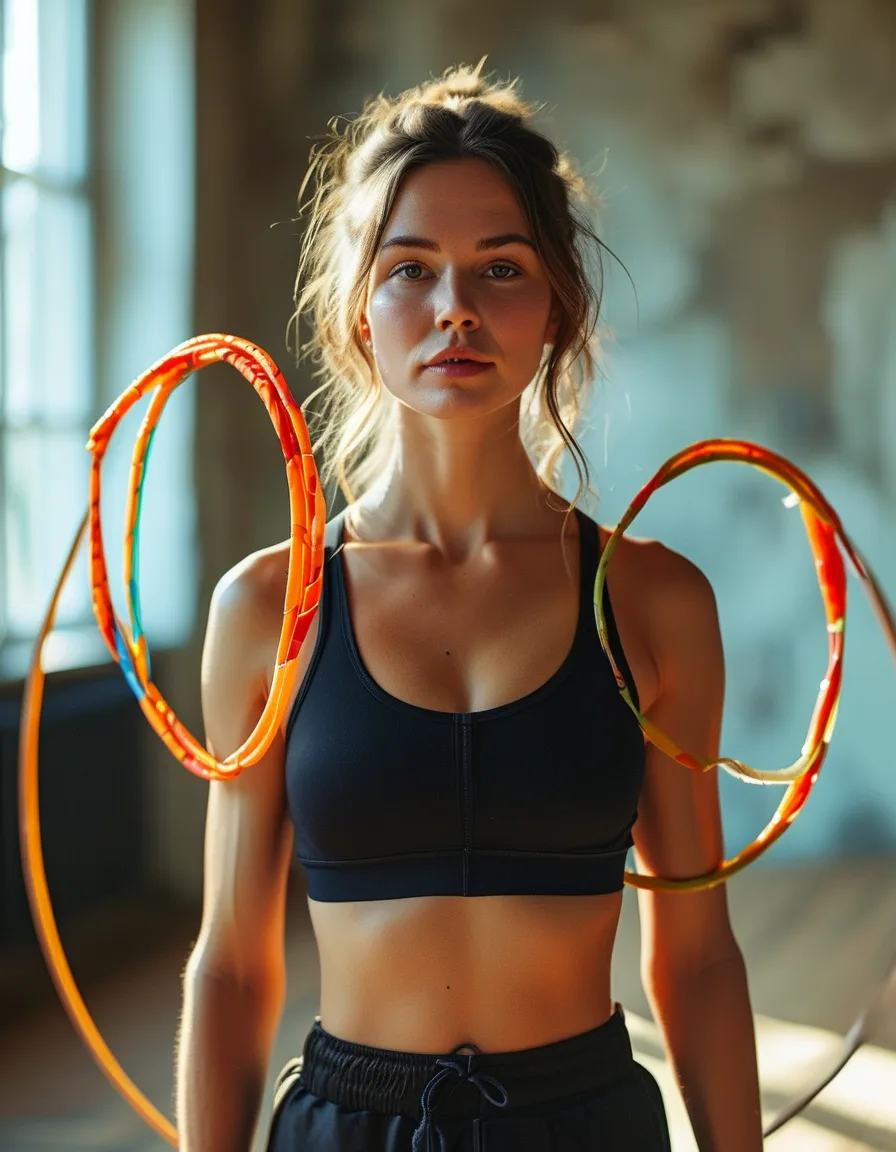
Why Does My Hula Hoop Keep Falling?
Because a small, light hoop gives you almost no reaction time.
The physics is straightforward. A smaller hoop has a shorter circumference, so it completes each rotation around your waist faster. A lighter hoop carries less momentum, so it loses speed quickly and needs a correction sooner.
Combine those and a toy hoop demands quick, precisely-timed hip movements at a fast tempo. That’s not a beginner skill. That’s a skill you’d develop after learning on something more forgiving — and it has nothing to do with natural rhythm.
A properly sized adult hoop rotates more slowly and carries more momentum through each revolution. You get a noticeably longer window to make each hip correction. Same person, same coordination, wildly different result.
The self-blame here is the real cost. People try twice, conclude they’re uncoordinated, and never pick up a hoop again — over an equipment mismatch they could have fixed for the price of a slightly bigger hoop.
What Size Hoop Should a Beginner Actually Use?
Stand the hoop upright on the floor next to you. It should reach somewhere between your waist and your chest.
That’s the whole test, and it rules out most hoops sold in general retail, which typically land somewhere around hip height or lower for an adult.
On weight, lean heavier within a reasonable range. Added weight means more momentum, which means a longer, more forgiving reaction window. A hoop in the roughly 1.5–2.5 lb range is a common beginner recommendation, versus the few ounces a toy hoop weighs.
Two caveats worth stating plainly:
- Heavier isn’t infinitely better. Very heavy weighted hoops — 3 lb and up — can cause bruising at the waist and aren’t the right entry point.
- Bigger and heavier is a learning tool, not a permanent setting. Once continuous hooping is genuinely comfortable, smaller and lighter hoops become learnable, and that’s when tricks and faster work open up.

Myth vs. Fact
Myth: If you can’t hula hoop, you have bad rhythm. Fact: Hoop size and weight determine the tempo you’re being asked to match. Wrong equipment makes anyone look arrhythmic.
Myth: You spin the hoop with a circular hip motion. Fact: The effective motion is more of a front-back (or side-side) push than a circle. Circling the hips is one of the most common reasons a correctly-sized hoop still drops.
Myth: Adults should use adult-looking hoops — meaning the sleek small ones. Fact: Small hoops are the advanced equipment. The unglamorous big one is the learner’s hoop.
Myth: Weighted hoops are for burning more calories. Fact: Weight primarily buys you momentum and reaction time. That it’s also more work is a side effect, not the reason a beginner needs it.
How Do You Choose Correctly and Actually Learn?
Check your current hoop first. Stand it up. If it doesn’t reach at least your waist, you’ve found your problem, and no amount of practice on that hoop is an efficient path forward. If your hoop keeps falling despite reasonable practice, the size check comes before any conclusion about skill.
Learn on the properly sized hoop. Build the fundamental continuous-hooping skill — the timing, the push, the ability to recover when it starts to drop — with equipment that gives you room to learn it.
Then progress downward. Smaller and lighter once the basic skill is genuinely established. This is a real progression path, the same way you’d progress load in any other training.
A practical starting session: give it 5–10 minutes at a time rather than one long frustrated stretch. Push the hoop off with one hand, and drive with a front-back hip motion rather than a circle. Expect it to click somewhere between the first session and the third — with the right hoop, this is not a long learning curve.
One note on comfort: hooping puts repeated contact on the waist and hip, and a weighted hoop on bare skin or a loose top can genuinely bruise. Something fitted and smooth over the waist — high waist leggings rather than a drawstring waistband — makes early sessions considerably less unpleasant.
FAQ
How long should it take to learn to hula hoop?
With a correctly sized hoop, many adults get continuous hooping within one to three short sessions. If you’ve been at it for weeks with no progress, check the hoop before questioning yourself.
Are weighted hoops safe for beginners?
Moderately weighted hoops in the roughly 1.5–2.5 lb range are widely used by beginners and are more forgiving than light ones. Very heavy hoops can bruise and aren’t a good entry point — and anyone with back issues or who is pregnant should check with a doctor first.
Which direction should I spin the hoop?
Whichever feels natural — most people have a preferred side. Start it with a firm push in that direction and match the hip motion to it rather than fighting for a “correct” side.
TL;DR
- A falling hoop is usually an equipment problem, not a coordination problem.
- Small, light toy hoops spin fast and demand quicker hip timing than a beginner can produce.
- The size test: stood upright, the hoop should reach between your waist and chest.
- Lean heavier within reason (roughly 1.5–2.5 lb) for more forgiving momentum.
- Learn big, then progress smaller once continuous hooping is comfortable.
Keep Reading
This article is for general informational and styling purposes only. Fit, sizing, and product availability may vary.