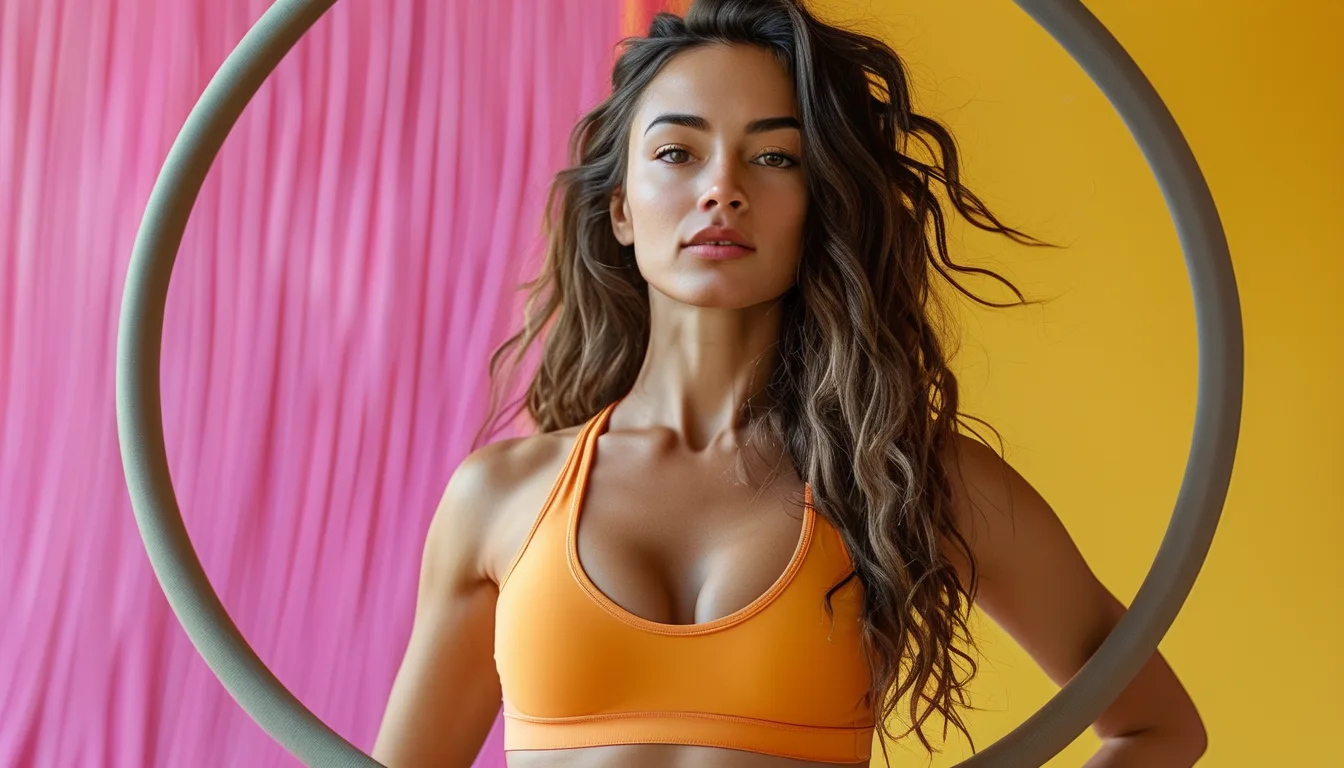
Choosing Your First Hoop: A Complete Size and Weight Walkthrough
Quick Answer: Beginners generally do best with a larger, heavier hoop (around chest to collarbone height when stood on end, roughly 250-350 grams) than the thin, fast hoops sold for kids — a bigger, heavier hoop rotates slower and is far easier to learn on.
Most people’s first hoop experience is with a lightweight kids’ hoop that spins too fast to control, and that single mismatch is why so many adults think they ‘can’t hoop.’

What size should a true beginner start with?
Stand the hoop on the ground next to you — a good beginner hoop reaches somewhere between your belly button and chest. Larger diameter hoops rotate more slowly around your body, giving you more reaction time to keep them going, which is the main obstacle for anyone just starting out.
Why does weight matter as much as size?
A heavier hoop (roughly 250-350 grams for adult beginners) creates more momentum per rotation, which translates to a slower, more controllable spin than the very light hoops marketed for children. Most ‘I can’t hoop’ adults are actually using a hoop built for a completely different body and skill level.

How do you find your specific right size?
Torso height is the key measurement — from the floor to somewhere between your belly button and lower chest gives a hoop that will consistently work with your waist rotation. As skill improves, many people gradually move to smaller, lighter hoops for more dynamic tricks.
What Nobody Tells You About Hoop Sizing
Hoop dance instructors will tell you that almost every ‘natural talent’ story is actually a sizing story — people who pick up hooping quickly are very often just using appropriately-sized equipment for the first time. Struggling with a too-small hoop for weeks, then switching to correct sizing, often produces success within a single session.
FAQ: Choosing Your First Hoop, Answered
Can I make my own hoop instead of buying one?
Yes — irrigation tubing is a common DIY material, and many beginners build their own hoop to the exact size and weight recommended above for less than a store-bought option.
When should I size down to a smaller hoop?
Once waist hooping feels stable and easy, usually after several weeks of consistent practice, sizing down helps you progress to faster tricks and off-body moves.
Does hoop weight affect which tricks I can learn?
Yes — heavier hoops are generally better for waist and body hooping, while lighter hoops suit faster hand tricks and isolations once you’re more advanced.
TL;DR:
- Beginners need a bigger, heavier hoop than kids’ hoops — belly-button to chest height when standing
- Aim for roughly 250-350 grams for adult beginners
- Correct sizing, not natural talent, explains most quick beginner success stories
- Size down gradually as waist hooping becomes stable
The right hoop makes this skill click almost immediately — most ‘I can’t hoop’ stories are really ‘wrong hoop’ stories.
Keep Reading
This article is for general informational and styling purposes only. Fit, sizing, and product availability may vary.