Beyond the Waist: A First Taste of Hoop Dance and Flow
Quick Answer: Once you can sustain a waist spin for about two minutes, you’re ready for off-body hoop dance. Start with three moves: the hand spin (hoop rotating flat on your palm), the lasso (overhead spin), and the vortex (lifting the hoop from waist to overhead mid-spin). Each takes one or two practice sessions to get and then stays with you. Expect a full hour to disappear the first time it clicks.
You got the waist spin. It stopped falling. You can hold it through a whole song.
Congratulations — you’ve finished the driveway.
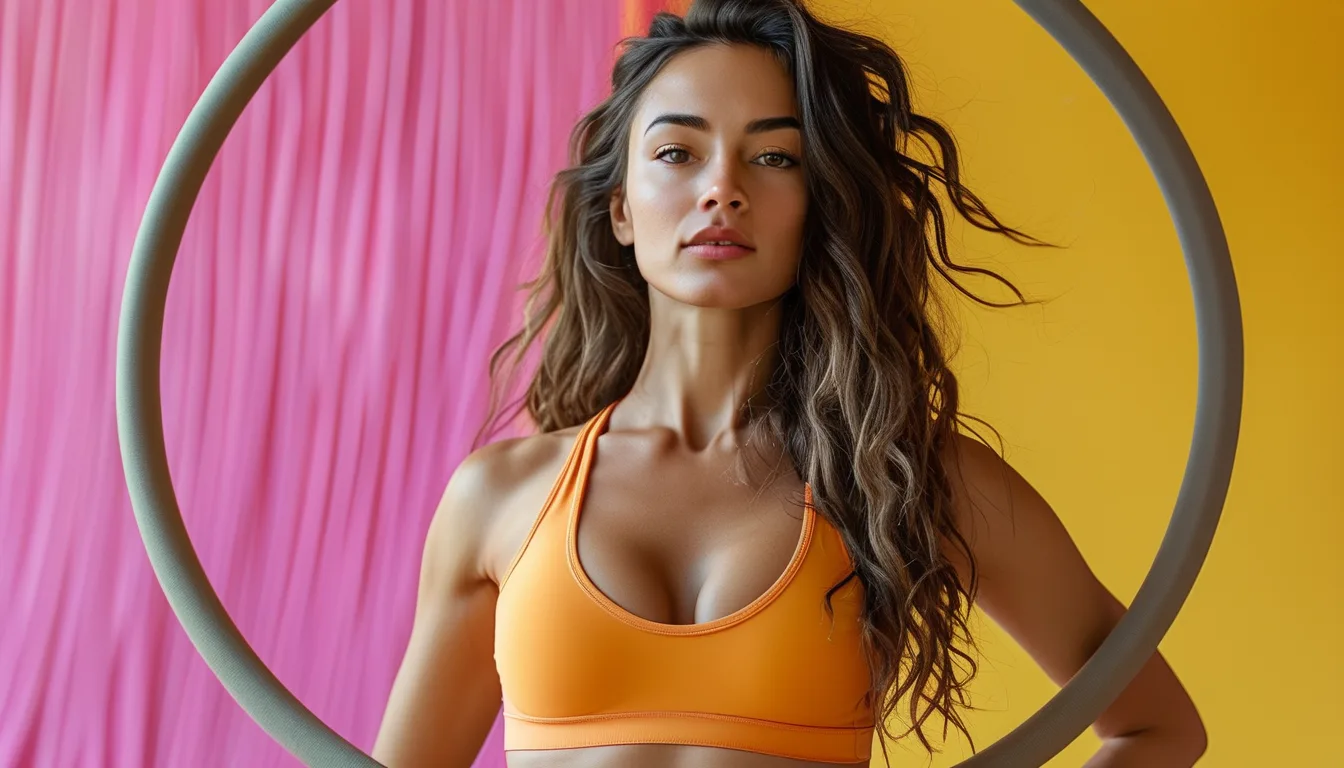
Hoop dance is what’s behind it: off-body spins, weaving, the hoop passing hand to hand like a dance partner with strong opinions about tempo. Same object, entirely different activity.


What are the first off-body hoop moves to learn?
Three, in this order. Each one is a session or two of giggling failure and then permanent.
The hand spin. The hoop rotates flat on an open palm. This teaches your hand to feel the hoop’s rhythm independently of your body, which is the foundation for everything off-body. Practice with the palm level and the elbow soft — most beginners chase the hoop with the whole arm instead of letting the wrist do it.
The lasso. An overhead spin, arm extended, hoop circling above you. It’s the easiest of the three and instantly makes anyone feel about 30% more mythical. Start slow; the hoop wants to travel outward, and the correction is a smaller circle, not a stronger grip.
The vortex. Lifting the hoop from a waist spin up to overhead while it’s still rotating. This is the gateway trick — the first one that connects on-body and off-body into a single continuous movement. It’s also the one that takes the most attempts, because the timing of the lift matters more than the strength of it.
Practice each for 10 to 15 minutes at a time. Longer than that and you’re just tiring your shoulders, not learning.
Why is it called flow arts?
Because the name is unusually literal.
Flow — in the psychological sense, the state of complete absorption where self-consciousness drops out — is reliably produced by rhythmic, low-consequence, full-attention physical practice. Hooping is almost a textbook case: the movement is continuous, the feedback is immediate (the hoop drops or it doesn’t), the stakes are zero, and it takes just enough attention to crowd out everything else.
Hoopers routinely describe sessions where an hour vanished. Not “went by quickly” — vanished, with no sense of elapsed time at all.
It’s moving meditation with a prop and a playlist, and it’s a much easier entry point than sitting meditation for people whose brains don’t cooperate with sitting still.
Where do you learn, and who else does this?
Hoop dance has one of the warmer online-and-in-person cultures in movement.
Tutorial creators cover every level, from first waist spin to advanced isolations, and most are free. Search a move by name and you’ll find five explanations of it in different styles — helpful, because different teachers cue the same trick in very different ways and one of them will click.
Flow jams happen in parks in most mid-sized cities and up. They’re searchable, they’re free, there’s no audition, and the culture is unusually welcoming to beginners — largely because everyone there remembers being unable to keep a hoop up.
LED hoops are the eventual rabbit hole. They’re genuinely magical at night and they’re not cheap — a decent programmable LED hoop runs $150–$400. Budget accordingly, and don’t buy one until you’re past the first month, because a beginner hoop should be heavy and slow and LED hoops usually aren’t.
A note on the hoop itself: adult beginners generally need a larger, heavier hoop than the toy version — roughly 38–42 inches in diameter for on-body work. A bigger hoop rotates more slowly and is dramatically easier to learn on. Off-body dance eventually favors smaller, lighter hoops, but that’s a later purchase.

Is hoop dance actually a workout?
It is, and it’s a sneaky one — the training happens while your brain thinks it’s playing.
On-body hooping is core-dominant: the constant micro-adjustments at the waist work the obliques and transverse abdominis continuously rather than in sets. Dance hooping adds shoulders and arms through the off-body moves and brings the legs in through footwork and level changes.
The real advantage is duration. A 45-minute hoop session accumulates a genuine amount of movement, and it accumulates it without any of the clock-watching that makes structured cardio hard to sustain. Play is the best adherence technology ever built — you’ll do an hour of something fun far more reliably than 20 minutes of something you’re enduring.
Wear something you can move in freely and that won’t shift as the hoop travels — a fitted top and high waist yoga pants or leggings work well, since loose fabric catches the hoop and interrupts the spin.
One practical caution: bruising on the hips and forearms is normal in the first couple of weeks and fades as your technique smooths out. See a professional — a physician or physiotherapist — if you have persistent lower back pain, an existing back or shoulder injury, or bruising that seems disproportionate to the activity.
What Nobody Tells You
- A bigger hoop is easier, not harder. Nearly every beginner struggles with a hoop that’s too small and too light, then “suddenly gets it” the moment they size up.
- The vortex is a timing problem, not a strength problem. People try to muscle the lift. The hoop does most of it if you catch the right point in the rotation.
- You’ll get bruises and then you won’t. They come from the hoop hitting the same spot with poor form and stop once the spin evens out.
- Learning both directions is worth the frustration. Your non-dominant direction feels impossible for about a week and then unlocks a huge amount of choreography.
- Nobody at a flow jam is judging you. The culture is unusually generous, and being visibly new is the fastest way to get free coaching.
FAQ
How long does it take to learn hoop dance?
A sustained waist spin usually takes a few sessions to a couple of weeks with a properly sized hoop. From there, the first three off-body moves — hand spin, lasso, vortex — typically take one to two focused practice sessions each. Linking moves into continuous flow takes longer, usually a couple of months of regular practice, but the individual tricks come faster than people expect.
What size hoop should a beginner buy?
For adult beginners doing on-body work, 38 to 42 inches in diameter with some weight to it. Larger and heavier hoops rotate more slowly, which gives you more time to react and makes learning dramatically easier. The lightweight children’s hoops sold in toy sections are the single most common reason adults conclude they “can’t hoop.”
Is hoop dance good exercise?
Yes — it’s continuous core work with shoulders, arms, and legs joining in once you add off-body moves and footwork. The bigger advantage is adherence: sessions naturally run 30 to 60 minutes because they’re enjoyable, which accumulates far more total movement than a shorter workout you have to talk yourself into.
TL;DR:
- Once your waist spin holds for about two minutes, you’re ready for off-body moves.
- Start with the hand spin, the lasso, then the vortex — one or two sessions each.
- Flow arts is named literally: the practice reliably produces genuine absorbed flow states.
- Free tutorials cover every level, and park flow jams are welcoming and audition-free.
- Beginners need a big heavy hoop, 38–42 inches. Small light hoops are why people quit.
- It’s real exercise, mostly core, and the adherence is the point.
- Early bruising is normal; see a clinician for persistent back or shoulder pain.
Keep Reading
This article is for general informational and styling purposes only. Fit, sizing, and product availability may vary.