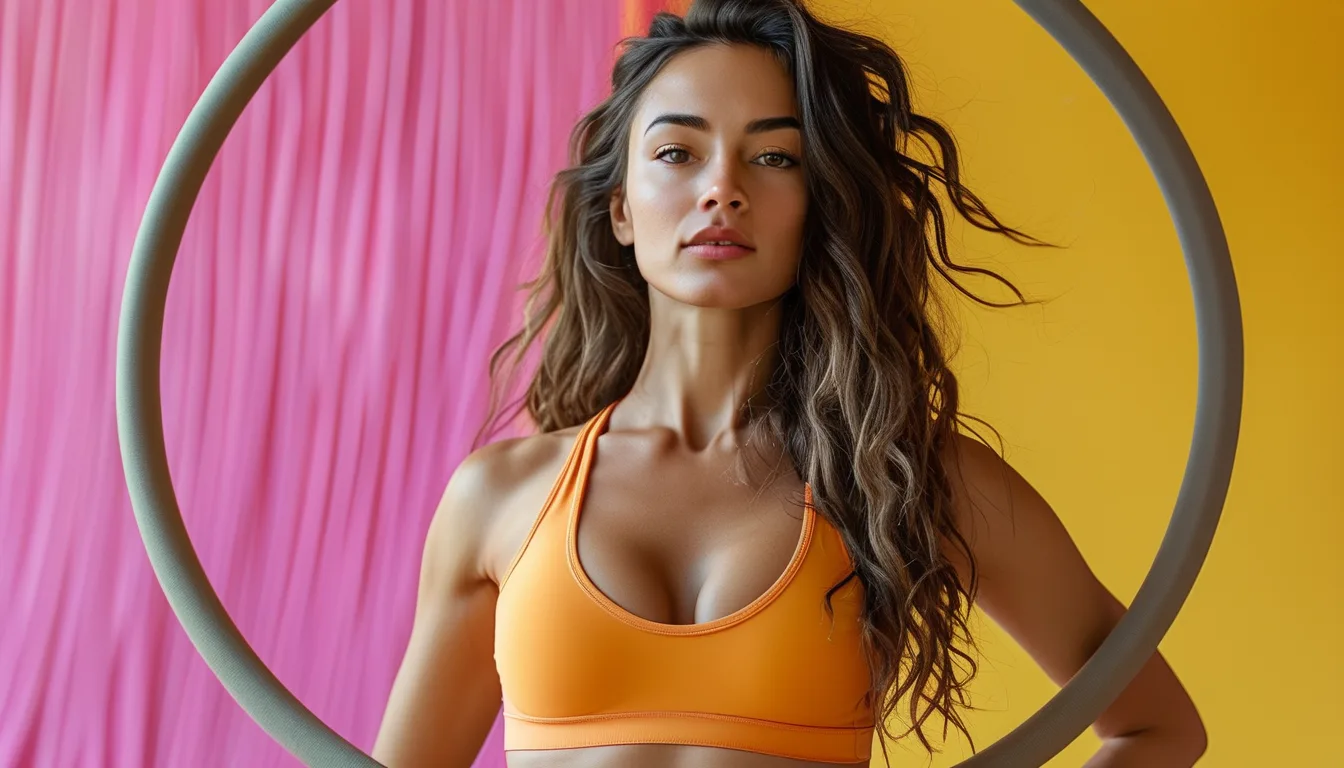
Beyond the Waist: The Hoop-Trick Progression From First Spin to Flow
You can keep a hoop on your waist for four minutes straight. Great. Now what?
That’s where most people stall out. Waist hooping is the door, not the room. The actual craft — the stuff that makes hoop videos look like magic — happens off the body: hand spins, passes, isolations, and the transitions that string them together.
Here’s the ladder, rung by rung.
Quick Answer: Learn the off-body basics first — hand spins and hand-to-hand passes, both hands, both directions. Then move the waist skill to other body parts (shoulders, arms, knees). Flow comes from practicing transitions between tricks, not from collecting more tricks. Use a bigger, slower hoop to learn new moves, and expect to drop it dozens of times per trick. That’s the rep count, not failure.


What’s the First Hoop Trick to Learn After Waist Hooping?
The hand spin. Everything off-body builds on it.
Hold your palm flat and vertical, get the hoop spinning around it, and keep it there. Sounds simple; takes about a week to feel stable. The real work is doing it four ways — left hand and right hand, clockwise and counterclockwise. Most hoopers learn one direction on their dominant hand, call it done, and then hit a wall six months later when every intermediate trick needs the other three.
Do all four from day one. It costs you two extra weeks now and saves you two months later.
After the hand spin, in rough order of difficulty:
- Hand-to-hand passes. Move the spinning hoop from one hand to the other in front of your body. Then behind your back. This is the first trick that makes people say “whoa,” and it’s genuinely faster to learn than it looks — most people get a passable front pass in three or four sessions.
- Isolations. The hoop appears to hang perfectly still in space while your body moves around it. It reads as advanced, it’s really a small circular hand motion, and about a week of mirror practice gets you a recognizable version.
- Vortex and lifts. Take the hoop from waist hooping up to an overhead hand spin without it stopping. This is the connector trick — the moment your waist vocabulary and your hand vocabulary become one language instead of two.
How Do You Progress From Basic Tricks to Real Hoop Dance?
Move the waist skill somewhere new, then learn to link things.
The body-part ladder. Chest and shoulder hooping is waist hooping relocated to a smaller, more sloped surface — same principle, harder execution. Get shoulder hooping and you’ve opened the entire upper-body vocabulary. From there: elbow and arm hooping (the arm becomes the new waist, and it builds visible arm coordination fast), then leg and knee hooping while standing on one foot, which is as much a balance drill as a hoop drill.
Breaks and reversals. Stop the hoop mid-spin and send it the other way. These are punctuation. A sequence of five tricks with no reversals looks like a list; the same five with two direction changes looks like choreography.
Skip the second hoop. Twin hooping is a real discipline, and it’s also the single most common way intermediate hoopers stall. Single-hoop vocabulary goes far deeper than most people ever explore. Twins are a later chapter, not the next one.

What Nobody Tells You About Hoop Flow
Transitions outnumber tricks. This is the thing that separates people who look like they’re doing hoop tricks from people who look like they’re dancing. Watch any flow artist you admire in slow motion and count: for every named trick, there are two or three unnamed movements getting them from one to the next. Turns, direction changes, level drops, weight shifts. Those movements are the dance. The tricks are punctuation inside it.
And here’s the practical consequence: transitions train separately from tricks. You don’t get better at linking by learning more moves. You get better by picking two moves you already own and drilling the seam between them, over and over, for five minutes.
The smallest useful unit of flow is two tricks and the bridge between them. Waist hoop → lift → hand spin. Do that fifty times. Now you have a sentence instead of two words.
Two more things that don’t show up in tutorials:
- Music does the work. Put on one song and hoop through it, every day, without planning what you’ll do. You’ll start unconsciously matching tricks to the structure of the music — building on the verse, hitting the chorus. That’s hoop dance forming on its own in your living room.
- Film yourself weekly. Flow is nearly invisible from the inside. You feel every drop and hesitation; you don’t feel the moments where it actually looked good. Video is the only honest feedback, and a month of weekly clips shows progress that day-to-day practice completely hides.

Why Do I Keep Dropping the Hoop — and How Do I Stop Getting Frustrated?
You keep dropping it because you’re learning. Every new trick costs somewhere between thirty and several hundred drops. The hoop hitting the floor is a rep counter, not a failure bell. Hoopers have a saying about this for a reason — drops are part of the dance.
But you can stack the deck:
Practice somewhere drop-friendly. A yard, a park, a garage, an empty studio. Practicing in a living room with a lamp two feet away adds stakes to every attempt, and stakes make you tentative, and tentative is exactly what stops you from committing to the movement. Half of “I can’t learn this trick” is really “I can’t fully commit to this trick where I’m standing.”
Structure the session. Twenty minutes beats an unfocused hour:
- 3–5 minutes warm-up — waist hooping, both directions, nothing new.
- Two focus blocks, ~5 minutes each — one trick per block, that’s it. Two tricks per session, not six.
- 5 minutes freestyle close — put on a song, use only what you already own, no new material.
The trying-everything-every-session approach feels productive and progresses nothing. Two tricks, drilled, beats eight, sampled.
Use hoop size as a difficulty dial. Bigger, heavier hoops spin slower and give you more time to react — perfect for learning something new. Smaller, lighter hoops move faster and are what you want for tricks you already own. Most hoopers end up with two: a large learning hoop and a smaller performance hoop. If you started with an adult beginner hoop, don’t retire it. It stays useful forever as the trick-learning hoop.
Grade practice on fun. If a session ends and you feel worse than when you started, something’s wrong with the structure, not with you. Hooping was play with a skill curve attached. The flow arrives fastest for people whose practice stayed a dance.
FAQ
How long does it take to learn hoop tricks?
Hand spins take about a week to feel stable, front passes three to four sessions, and a recognizable isolation roughly a week of mirror work. Shoulder hooping is usually a two-to-four-week project. Practicing 20 focused minutes most days will move you faster than a two-hour session once a week — this is a nervous-system skill, and frequency beats duration.
What size hoop should I use for tricks?
Bigger and heavier for learning, smaller and lighter for performing. A larger hoop rotates more slowly, which buys you reaction time on a move you don’t own yet. Once a trick is automatic, a smaller hoop makes it look faster and cleaner. Keep both.
Do I need to master waist hooping before learning off-body tricks?
No. You need to be comfortable with it — able to keep it going for a couple of minutes without full concentration — but you don’t need to master it. In fact, starting hand spins early is a good idea, because hand spins and waist hooping build different skills and neither one has to wait for the other.
TL;DR:
- Hand spins first — both hands, both directions, all four combinations. Skipping this creates a wall six months later.
- Then passes, isolations, and lifts, then relocate the waist skill to shoulders, arms, and knees.
- Flow is transitions, not tricks. Drill the seam between two moves you already own; that’s the smallest unit of real flow.
- Drops are the rep counter. Practice somewhere you can drop freely, or you’ll never fully commit to the movement.
- 20 focused minutes, two tricks max per session, big hoop for learning and small hoop for performing.
- Film yourself weekly — flow is invisible in the moment and obvious on video.
Keep Reading
This article is for general informational and styling purposes only. Fit, sizing, and product availability may vary.