Why Your Hula Hoop Keeps Falling (It's Almost Never Your Rhythm)
Quick Answer: A hoop that keeps falling is most often too small or too light for adult beginners — a hoop should reach roughly between your waist and chest when stood on end. Pair the right size with a front-to-back weight shift (not side-to-side hip circles) and most beginners keep it up within a session.
You remember hooping as a kid without a second thought. As an adult, it drops after two rotations, every single time. Before blaming your coordination, check the hoop itself — most adult beginners are using equipment built for kids.

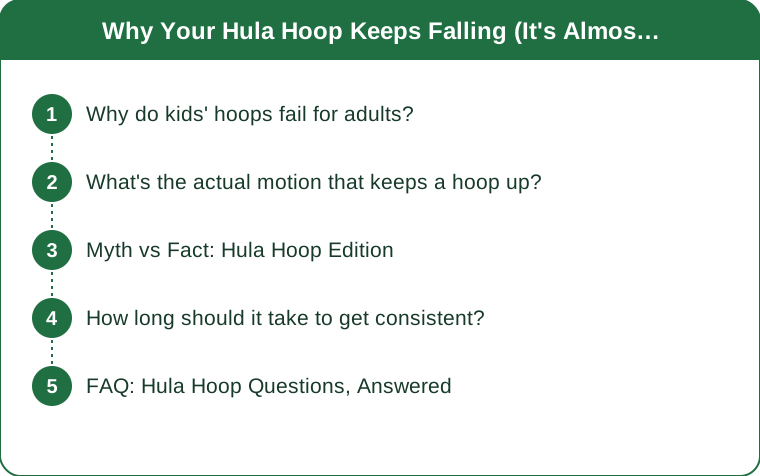
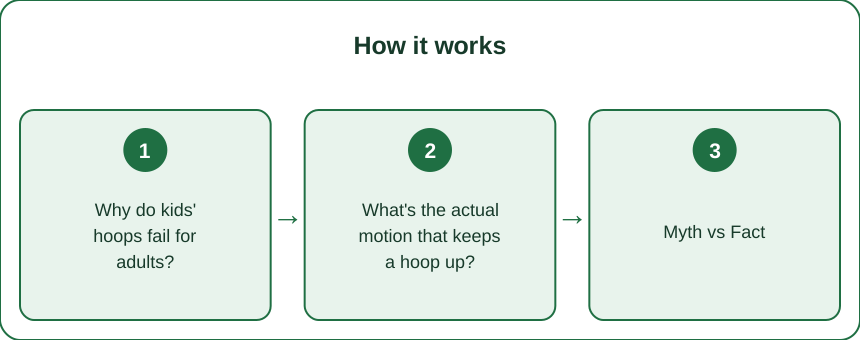
Why do kids’ hoops fail for adults?
Size and weight, not skill. A child’s lightweight hoop needs much faster hip speed to stay up than adult hips can comfortably generate. An adult-sized hoop (reaching between your belly button and chest when stood upright) with some added weight rotates slower and gives you far more time to react between passes.
What’s the actual motion that keeps a hoop up?
It’s a front-to-back rock, not a side-to-side hip circle. Push your torso forward as the hoop passes your front, then rock back as it passes behind you — like you’re pushing it around your waist in a circle with alternating front/back pressure, not swiveling like a dance move.

Myth vs Fact: Hula Hoop Edition
Myth: You need fast hips to hoop well. Fact: A heavier, larger adult hoop rotates slowly on purpose — fast, frantic hip movement actually knocks a beginner hoop off rhythm faster.
Myth: If it worked as a kid, the skill just transfers. Fact: Adult hip mechanics and hoop size are different enough that it’s closer to learning fresh — that’s normal, not a sign you’ve lost the ability.
Myth: Bruising means you’re doing it wrong. Fact: Some early bruising from an unpadded hoop edge is common and fades as your body adjusts — a slightly padded or wider hoop reduces it while you learn.
How long should it take to get consistent?
Most adult beginners with the right-sized hoop get 30+ seconds of consistent rotation within their first 2-3 practice sessions. If you’re still dropping it every rotation after several sessions, check hoop size first — it’s the single most common fixable cause.
FAQ: Hula Hoop Questions, Answered
What size hula hoop should an adult beginner buy?
Somewhere between your belly button and lower chest when the hoop is stood upright next to you — bigger diameter and a bit of weight both help beginners.
Does a weighted hoop help or just cause more bruising?
A moderate weight (1-2 lbs) actually helps rhythm and reduces the frantic quick-catch reflex that causes bruising — very heavy hoops (3+ lbs) can cause more impact issues for beginners.
How often should I practice to build the skill?
10-15 minutes daily builds the front-to-back rhythm faster than one long weekly session — it’s a timing skill that benefits from frequent short reps.
TL;DR:
- Kids’ hoops fail for adults mainly due to size and weight, not lost coordination
- Buy adult-sized: reaching between belly button and chest when stood upright
- The motion is a front-to-back rock, not a side-to-side hip swivel
- 10-15 minutes daily builds the rhythm faster than one long weekly session
Keep Reading
This article is for general informational and styling purposes only. Fit, sizing, and product availability may vary.