Relearning the Hoop: Why It Stopped Working (and the Fix)
Quick Answer: Adults fail at hula hooping because they’re using a kids’ hoop, not because they lost the skill. A small light hoop spins twice as fast and is far harder to sustain. Get an adult hoop that reaches your chest when stood on the floor, and pulse your hips front-to-back rather than in circles. Most people re-crack it inside one ten-minute session.
The adult hula hoop attempt follows a script.
Confident grab — you did this constantly at eight. Immediate clatter. Bewildered retry. Slightly longer clatter. Quiet existential doubt about what else your body has silently stopped being able to do.
Relax. Nothing is wrong with you. Two specific things changed, and both are fixable in ten minutes.

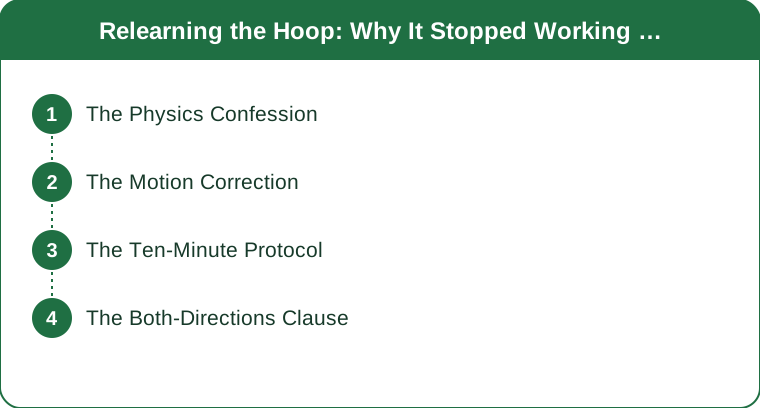
Why Can’t Adults Hula Hoop Anymore?
Because you’re holding the wrong equipment, and the physics is genuinely against you.
Here’s the confession nobody makes: kid-you had a proportionally enormous hoop. A hoop that reached your chest at age eight was roughly 30 inches across on a small body. It rotated slowly — maybe one revolution per second — which gave you an eternity to react to each pass.
Adult-you grabbed the same 30-inch hoop off a shelf, put it on a larger body, and it now spins at nearly twice that rate on a much shorter circumference around your waist. You have half the reaction window and more mass to move.
The fix is equipment, not talent. An adult hoop should reach somewhere between your navel and your chest when stood upright on the floor — typically 37 to 42 inches in diameter, weighing 1 to 2 pounds. That combination spins slowly enough to be learnable.
The heavier, larger hoop feels almost comically slow at first. That’s the point. Speed is what defeated you, not coordination.
What’s the Right Hula Hoop Motion for Adults?
The second false memory: the circular hip swirl.
Almost everyone remembers hooping as a circular hip rotation, and almost nobody actually does that. Sustained hooping runs on a linear pulse, not a circle.
The front-back pulse (easiest to learn):
- Stand with one foot slightly ahead of the other, about a foot apart.
- Push your hips forward, then back. Just forward and back — no rotation at all.
- Time the forward push to meet the hoop as it crosses your front.
The side-to-side shift: stand with feet parallel and shift your weight left-right. Same principle, different axis. Some people find this more natural.
Pick one axis and pulse it rhythmically. The circle is what the hoop does. You just push it at the right moment, twice per revolution.
This single correction fixes more adult hoopers than everything else combined.
What’s the Ten-Minute Relearning Protocol?
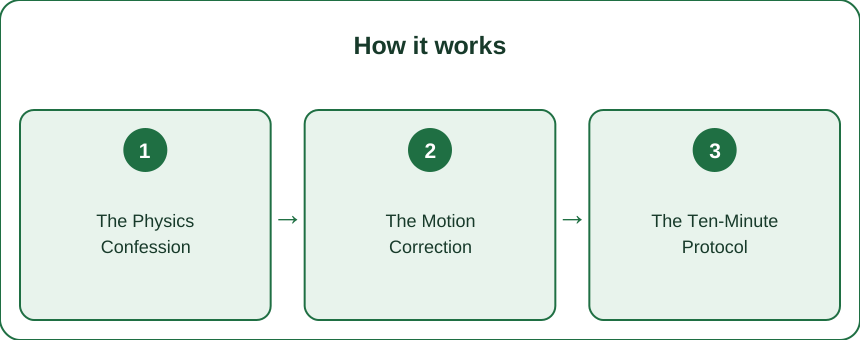
Ten minutes, three phases. Do it once and most people have it.
Minutes 1–3: Spin and drop. Hold the hoop against your lower back, level with the floor. Give it a firm push around your waist — and then just let it fall. Do this ten times. You’re not trying to hoop yet. You’re learning how fast it travels and where it contacts your body. Push harder than feels necessary; a weak launch is unrecoverable.
Minutes 4–7: Catch the rhythm. Now add the pulse. Aim for ten-second saves, not sustained hooping. Spin, pulse, count, drop, reset. Each save teaches the timing more than a minute of frustrated flailing.
Minutes 8–10: Add music. This is the phase that clicks it. Music prevents the most common failure — pulsing faster and faster in panic as the hoop drops. Pick something around 120 BPM and pulse to the beat. Steady rhythm is what sustained hooping actually is.
Most adults re-crack the code inside one session. And grin exactly like eight-year-olds when it happens, which is the actual reason to do this.
What Nobody Tells You About Adult Hooping
- Bruises are normal in week one. Low-grade hip bruising from a weighted hoop is common and disappears as your technique smooths out. If it’s genuinely painful, your hoop is too heavy — drop to a 1 lb model.
- Train both directions from day one. Everyone has a natural spin direction and a stubborn one. The stubborn side is far more trainable while you’re still finding all of this funny, and training both builds balanced obliques rather than one-sided ones.
- Bare skin or a fitted top, not a loose t-shirt. Fabric bunches and the hoop catches. This one change fixes an astonishing number of “I just can’t do it” cases.
- Hooping is real cardio once you can sustain it. A weighted-hoop session sits in a similar effort range to a brisk walk or light jog, with meaningful oblique and hip-flexor work layered in.
- The learning curve is steep and then flat. People go from zero to two continuous minutes in one session, then plateau for a week before it becomes effortless — which surprises everyone who expected gradual progress.
What Should You Look For When Buying an Adult Hoop?
Four specifications:
- Diameter: 37–42 inches. Stand it upright — it should hit between navel and chest. Taller or larger bodies want the upper end.
- Weight: 1–2 lbs for learning. Heavier hoops spin slower and are easier to sustain. Under 1 lb is a performance hoop, not a learning one.
- Smooth interior, no aggressive ridges. Massage-nub hoops are marketed heavily and are a genuinely bad choice for beginners — they bruise.
- Sectional or one-piece? Sectional hoops store easily but can pinch at the joints. One-piece is smoother if you have somewhere to put it.
Once you can sustain two minutes, the fitness layer opens up — the weighted hoop workout was waiting behind the relearning the whole time. A fitted high-waist legging helps more than you’d expect here, since anything loose at the waist is exactly what the hoop catches on.
Frequently Asked Questions
What size hula hoop should an adult use?
Stand the hoop upright on the floor — it should reach between your navel and mid-chest, typically 37–42 inches in diameter. Larger diameters rotate more slowly and are significantly easier to learn with, so beginners should err larger rather than smaller.
How heavy should a beginner’s hula hoop be?
One to two pounds. The extra weight slows rotation and gives you more reaction time between passes. Lighter hoops under a pound require far more precise timing and are intended for tricks and off-body work, not for learning.
How long does it take to learn to hula hoop as an adult?
Most adults with the right hoop sustain a spin within a single ten-minute session, and reach two continuous minutes within a week of short daily practice. The equipment change accounts for most of that — people who struggle for weeks are usually still using a child’s hoop.
Is hula hooping actually good exercise?
Yes. Sustained weighted hooping raises heart rate into a moderate-intensity range and works the obliques, hip flexors, and lower back continuously. A 20-minute session is comparable to a brisk walk with added core work — and considerably harder to get bored of.
TL;DR:
- You didn’t lose the skill — your hoop is too small and spins twice as fast as the one you had at eight.
- Get a 37–42 inch, 1–2 lb hoop that reaches your chest when stood upright.
- Pulse hips front-to-back (or side-to-side), not in circles. The circle is the hoop’s job.
- Ten-minute protocol: 3 min spin-and-drop, 4 min ten-second saves, 3 min with 120 BPM music.
- Wear something fitted, train both directions, and expect mild bruising in week one.
Keep Reading
This article is for general informational and styling purposes only. Fit, sizing, and product availability may vary.