Why Your Hula Hoop Keeps Falling Even When Your Form Looks Right
Quick Answer: A hula hoop that keeps falling despite correct stance and push technique is most often explained by hoop weight and diameter mismatched to your body and skill level, not a form problem — a hoop too light or too small for a beginner requires much faster rotation speed than a properly sized hoop, making it drop far more easily even with technically correct movement.
Your push, your stance, your rhythm all check out against every tutorial you’ve watched — and the hoop still hits the floor constantly. At that point, the hoop itself is very likely the actual variable, not your technique.

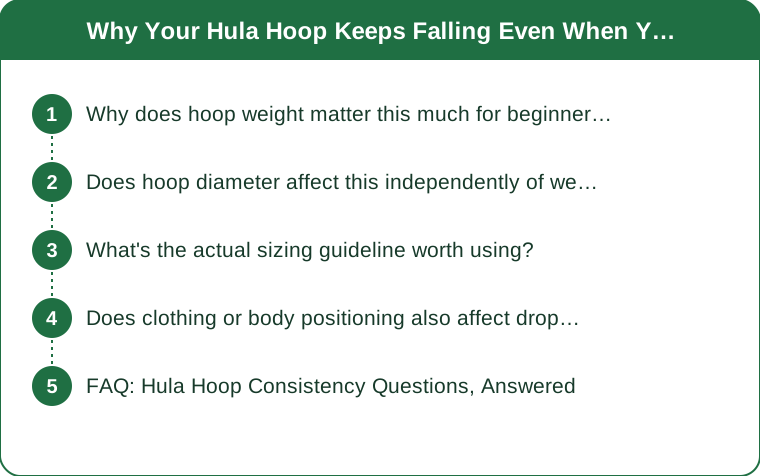
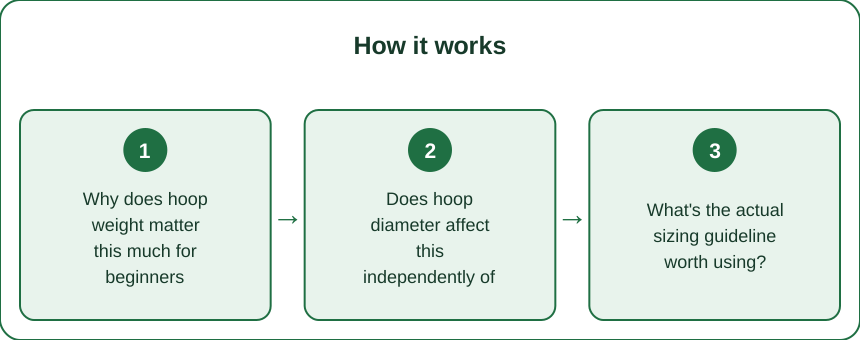
Why does hoop weight matter this much for beginners specifically?
A heavier hoop moves more slowly and predictably around the body, giving a beginner more time to react and adjust their push timing between rotations — a lightweight hoop (common in cheaper toy versions) requires much faster hip movement to keep pace, which is genuinely much harder for someone still building the specific timing skill.
Does hoop diameter affect this independently of weight?
Yes — a larger diameter hoop rotates more slowly around the body than a smaller one at the same push force, again giving more reaction time, which is exactly why fitness and beginner hooping communities consistently recommend larger, heavier hoops for people learning, even though smaller, lighter hoops look more like what’s typically marketed for hooping tricks online.

What’s the actual sizing guideline worth using?
A common beginner guideline suggests a hoop reaching roughly between your waist and lower chest when stood on end, and weighing enough to feel a noticeable, deliberate momentum as it swings — a hoop that feels nearly weightless in your hands is very likely too light for consistent beginner success regardless of technique.
Does clothing or body positioning also affect drop rate independent of the hoop itself?
Somewhat — very smooth, slippery fabric at the waist can reduce the friction the hoop needs to maintain contact and momentum, and standing with feet too close together or knees locked reduces the stabilizing base needed to sustain rotation — both worth checking, but usually secondary to hoop size and weight for someone whose form otherwise looks correct.
FAQ: Hula Hoop Consistency Questions, Answered
What’s a reasonable weight range for a beginner fitness hula hoop?
Many beginner-recommended hoops fall in a moderate weight range noticeably heavier than a typical toy hoop — checking product descriptions for ‘beginner’ or ‘weighted fitness’ hoops rather than toy-marketed ones is a good starting filter.
Should you size down once you improve, or keep using the beginner hoop?
Many hoopers do transition to a smaller, lighter hoop as skill improves, since a lighter hoop allows for more advanced tricks once basic timing is well established.
Is it possible to have genuinely bad form even with the right hoop size?
Yes — hoop size and weight solve the most common beginner issue, but persistent dropping despite a properly sized hoop is a reasonable point to actually review push and stance technique.
TL;DR:
- Hoop weight and diameter, not form, is the most common cause of frequent dropping for beginners
- A heavier, larger-diameter hoop rotates more slowly, giving far more reaction time to a beginner
- A hoop reaching between waist and lower chest height, with real noticeable weight, is a reasonable sizing guideline
- Slippery clothing and a too-narrow stance are secondary factors worth checking after hoop size
Before blaming your form one more time, check the hoop itself — a lot of ‘good form, still falling’ cases are really just ‘wrong hoop for this stage.’
Keep Reading
This article is for general informational and styling purposes only. Fit, sizing, and product availability may vary.